top of page
< Back

"The long farewell to the US dollar" VIJAY PRASHAD

The US dollar remains the world's primary currency, but its hegemony faces challenges. Sanctions, reserve freezes, and the growing search for alternatives are driving de-dollarization. The process, however, is gradual and requires new financial institutions capable of promoting sovereign development and reducing dependence on the US-dominated monetary system.
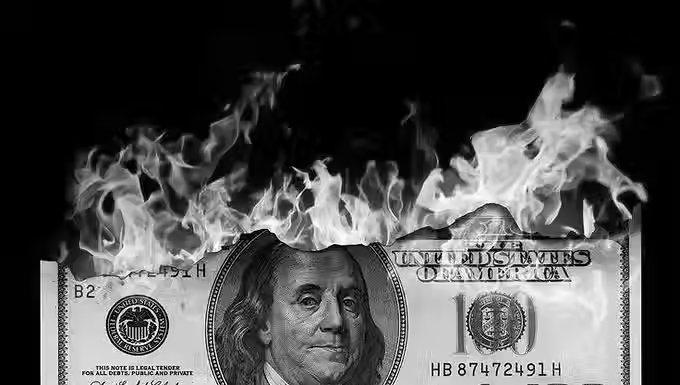
July 23, 2026 Dear friends, Greetings from the Tricontinental Institute for Social Research. There are moments in history when a system appears so complete that it becomes difficult to imagine its end. When Britain "ruled the waves," much of the world believed that sterling was not merely a currency but the very natural language of commerce. Since the mid-20th century, the United States has regarded the US dollar in much the same way. In 1980, amid the crisis of the post-Bretton Woods order, Argentine economist Raúl Prebisch observed that "in the United States, the illusion of the almighty dollar prevailed." At that time, however, this was not merely an American illusion. The dollar had already become the world's leading reserve currency and the dominant currency in international trade. Now, that illusion has begun, slowly and unevenly, to unravel. Our latest dossier, The Architecture of Power: The Dollar, Financialization, and the Struggle for Sovereignty, demonstrates that the dollar is not merely money but an institution of imperial power. The dollar system organizes trade, determines access to credit, disciplines governments, finances wars, and reproduces a hierarchy between the Global North and South. The debate over the dollar, therefore, is not simply about preferring one currency over another — the dollar over the renminbi (RMB) or the euro — but rather about questioning whether humanity can build an international monetary order that serves development rather than domination.

the-long-farewell-to-the-us-dollar-vijay-prashad

bottom of page